Researching Hungarian Ancestors in Slovakia and Romania
Due to historical border changes, many Hungarian ancestors were born or lived in territories that are now part of Slovakia or Romania. As a result, family records may be preserved outside modern Hungary.
This page explains how cross-border genealogy research works, where Hungarian-related records are kept in neighboring countries, and what challenges researchers commonly encounter.
Historical Background and Border Changes
Hungary’s history is deeply connected to Central and Eastern Europe. Before 1920, the Kingdom of Hungary covered a much larger area than the country’s modern territory. When the borders were redrawn, entire regions with Hungarian-speaking populations became part of Slovakia, Romania, Ukraine, and other neighbouring states. This means that someone with Hungarian roots may discover that their family’s village is no longer in Hungary but across the border. This is why so many researchers today focus on Hungarian ancestors in Slovakia and Romania, since records of their families may be preserved in archives outside Hungary.
Researching in Slovakia
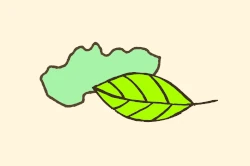
Many families searching for Hungarian ancestors find connections in southern Slovakia, which was historically part of Upper Hungary. Records in this region are often written in Latin, Hungarian, or Slovak, depending on the time period. Church records such as baptism, marriage, and burial registers are particularly important, as civil registration did not begin until the late 19th century.
For those tracing Hungarian ancestors in Slovakia, it is important to note that archives in Slovakia are well-organised, with regional branches preserving parish and civil records. However, language barriers and handwriting styles can pose challenges. Researchers may also find that names were recorded differently in Slovak and Hungarian, leading to spelling variations that must be considered when building a family tree.
Researching in Romania
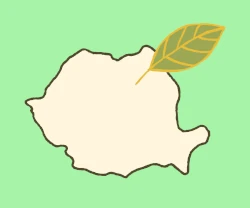
Romania is another key country for those seeking Hungarian roots. Transylvania and Partium, regions with large Hungarian populations, were part of the Kingdom of Hungary for centuries before becoming part of Romania. Records for these areas are preserved in both Romanian and Hungarian archives, and they may appear in Latin, Hungarian, German, or Romanian.
Tracing Hungarian ancestors in Romania often means navigating multiple archival systems and languages. In Romania, many church and civil records are stored in county archives, but not all are digitised. Civil registration began in 1895, so earlier research depends heavily on parish records. Researchers should be prepared for variations in record-keeping and differences in administrative practices between counties.
Common Challenges in Cross-Border Research
When tracing Hungarian ancestors beyond modern borders, several challenges frequently arise:
- Language diversity. Records may appear in Hungarian, Latin, Slovak, German, and Romanian, depending on the time and place.
- Name variations. Hungarian surnames often appear with different spellings, adapted to the local language or administrative style.
- Accessibility. While some archives are digitised, many still require in-person visits, making research more complicated for those abroad.
- Regional differences. Each country has its own archival system, privacy laws, and rules for accessing documents.
Despite these difficulties, the search for Hungarian ancestors in Slovakia and Romania remains rewarding, offering valuable insights into cultural identity and family history.
Tips for Successful Research
- Start with family knowledge. Gather as much information as possible from relatives, old photographs, letters, and family documents.
- Identify the original village. Knowing the precise location of events is crucial, since many villages share similar names.
- Learn key terms. Familiarise yourself with basic Hungarian, Latin, Slovak, and Romanian genealogical vocabulary to interpret records.
- Consult multiple archives. For Hungarian ancestors in Slovakia and Romania, be prepared to search both national and regional archives.
- Consider professional help. Local researchers can provide valuable expertise in navigating archives and translating documents.
Conclusion
Tracing Hungarian ancestors beyond modern borders is both challenging and fascinating. Because of Hungary’s complex history and shifting boundaries, many families today discover that their roots lie in what is now Slovakia or Romania. By understanding the historical context, preparing for language and record-keeping differences, and using both online and offline resources, researchers can successfully uncover their family stories. Although searching for Hungarian ancestors in Slovakia and Romania can be time-consuming, the rewards of reconnecting with cultural heritage and learning about ancestral lives make the effort worthwhile.
How professionals handle cross-border research
Professional genealogists account for historical borders, administrative changes and multilingual records. Research is coordinated across countries to maintain continuity.
When cross-border complexity arises
Cross-border genealogy research often involves multiple archives, languages, and record systems. Professional assistance can help navigate these complexities efficiently.